
Silk-matt, soft underfoot
Flexible poured floor:
Velura
A flexible poured polyurethane floor with a subtle pattern in a silk-matt finish. Soft underfoot, a little quieter to walk on and without a single joint.
Exact price after a site survey
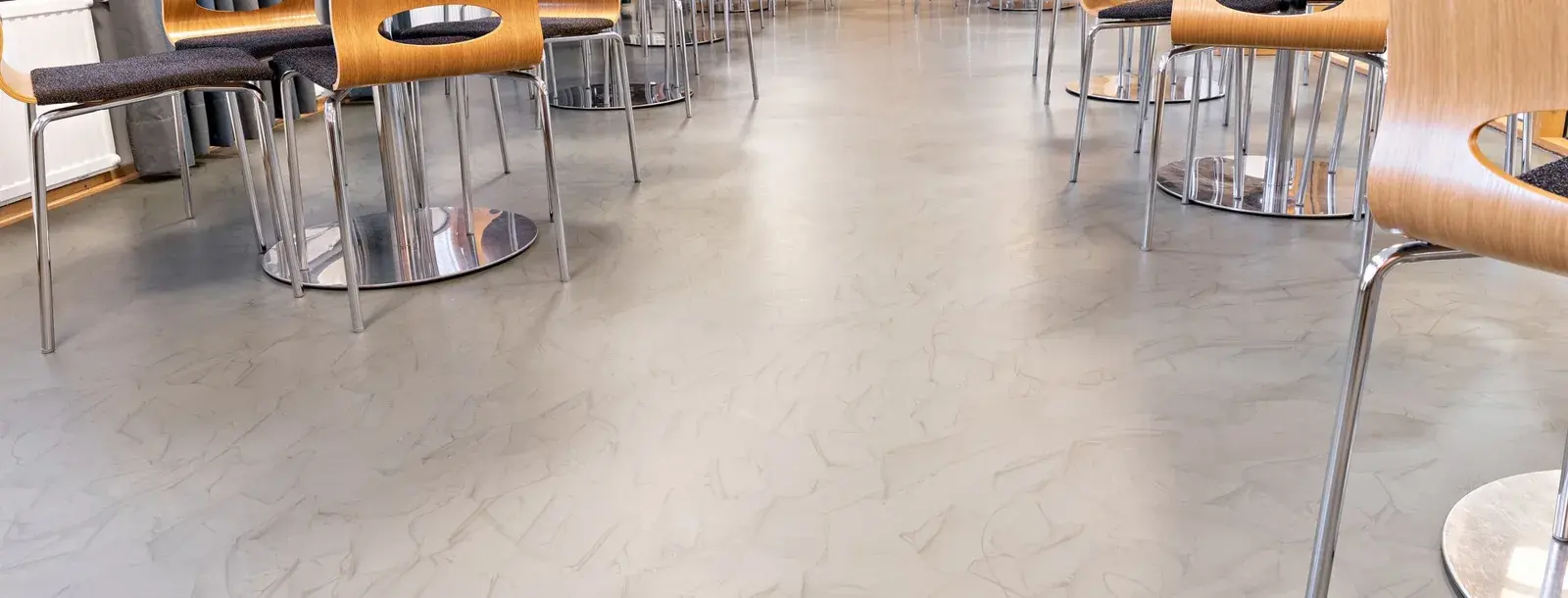
Velura is not epoxy. It is a flexible poured polyurethane floor for interiors: flats, houses, offices and shops. Unlike epoxy, it gives slightly underfoot, which makes it a soft poured floor that is pleasant to walk on. The surface is smooth, matt and without a single joint.
It is a decorative polyurethane floor whose pattern nobody draws. It forms during the pour: we spread the material with a trowel and every stroke leaves a soft, shaded trace in the surface. We pour in a single shade, so the pattern is tone-on-tone, not a mosaic of colours. No two floors turn out the same, and you can’t order an exact pattern in advance. The manufacturer’s colour chart has 67 shades, from white and cream through blues and greens to greys and black. In the colour chart the pattern is barely visible in some shades and pronounced in others.
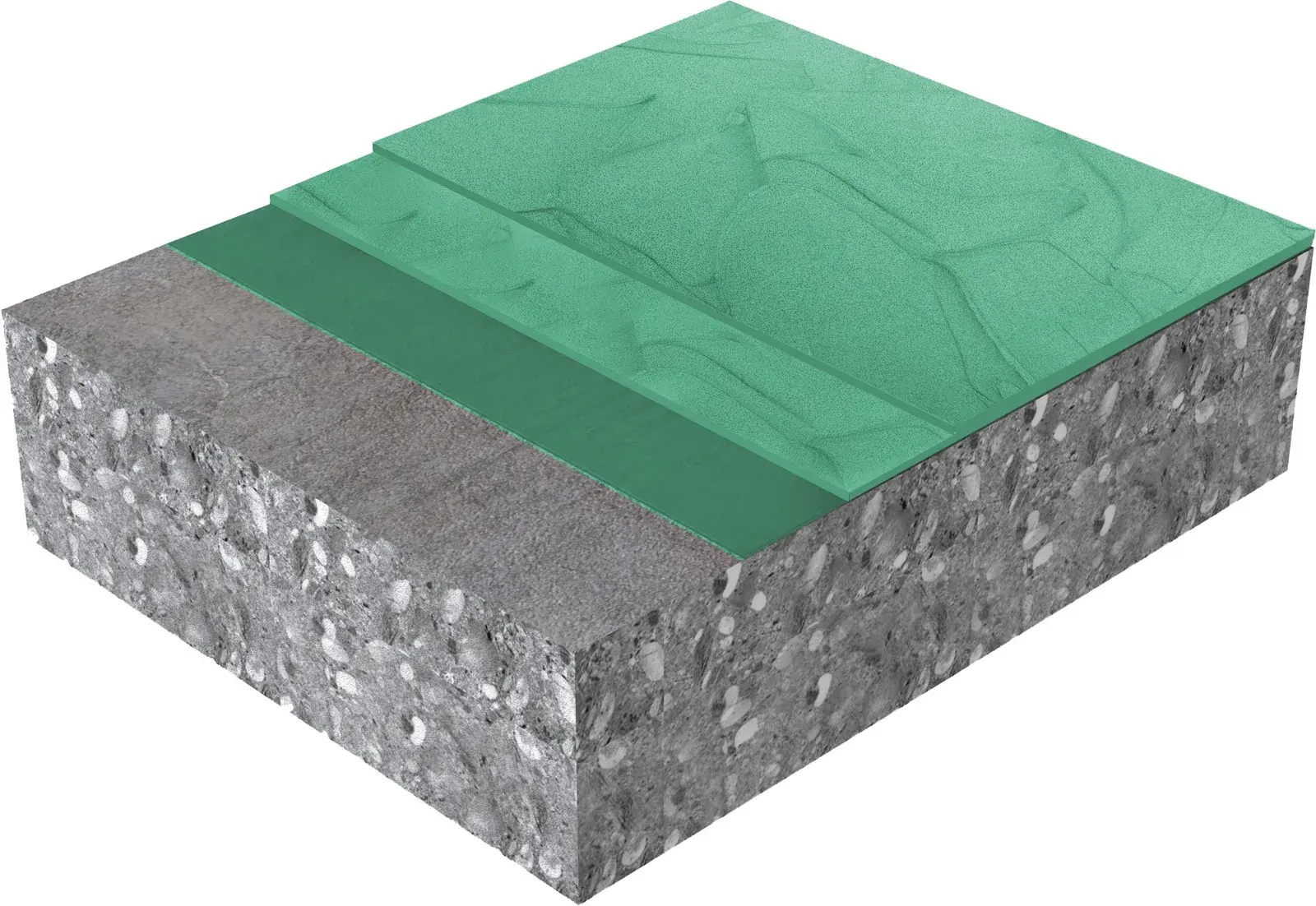
Velura needs a flat, sound and dry substrate. That is why our build-up starts with a primer and a levelling layer at least 4 mm thick, followed by an intermediate coat, the Velura itself at around 2 mm and finally a matt topcoat. The whole build-up comes to roughly 6 mm. The material is Sikafloor-3000 FX from the Sika ComfortFloor system. The photos on this page and the shade samples are the manufacturer’s, not our own projects.
Features
- Flexible polyurethane, softer underfoot than epoxy
- Subtle tone-on-tone pattern, every floor different
- Silk-matt surface with no joints
- Around 2 mm over a levelling layer, sealed with a matt topcoat
- 67 shades in the manufacturer’s colour chart
- Low emissions according to the manufacturer: A+ and Indoor Air Comfort Gold
How Velura looks in an interior
The pattern is made by the stroke of the trowel, so it is different in every photo: almost imperceptible in some, pronounced in others. There is always just one shade.
Reference interiors from the material’s manufacturer. They are not our projects.
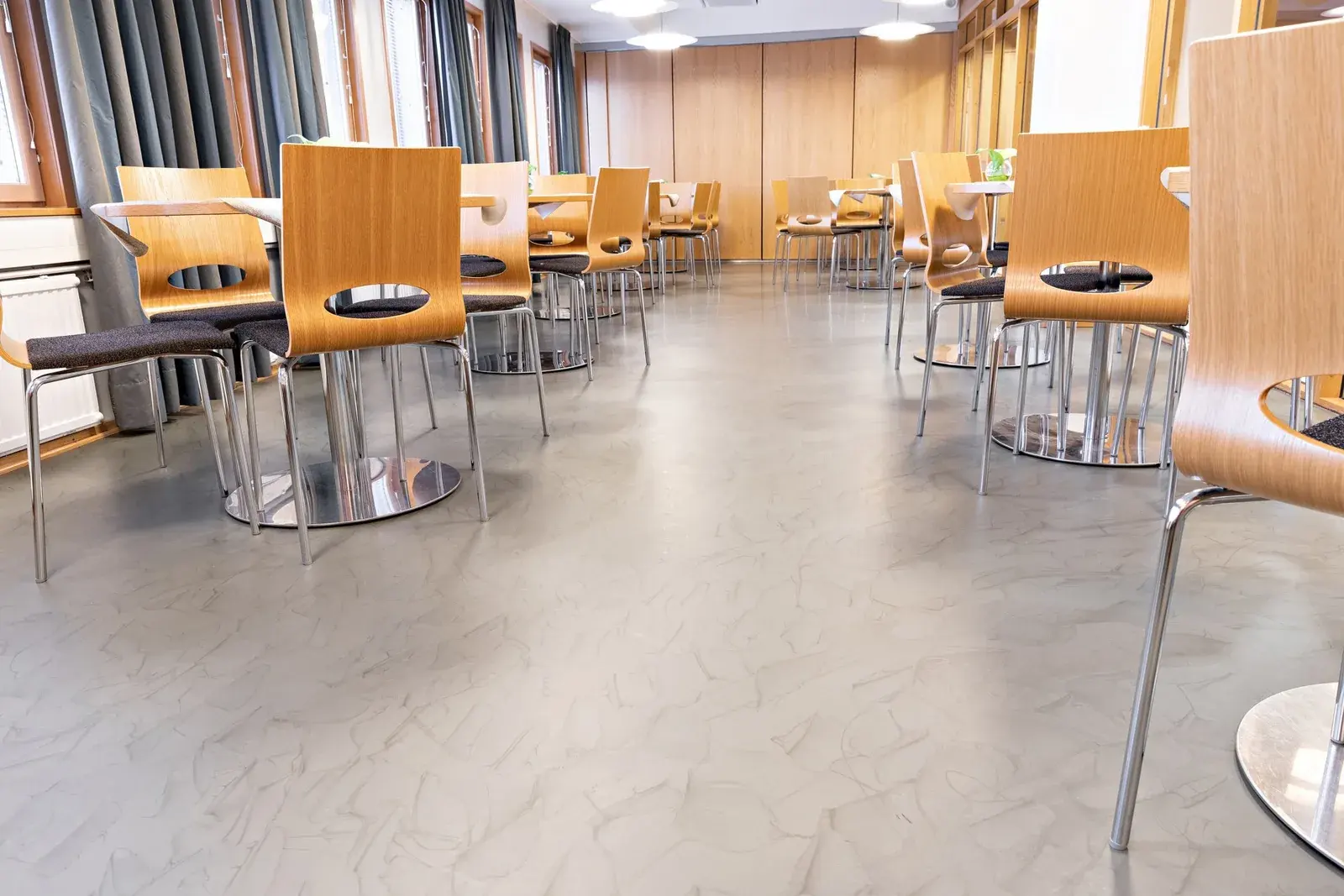
Dining room, light grey-beige shade, subtle pattern 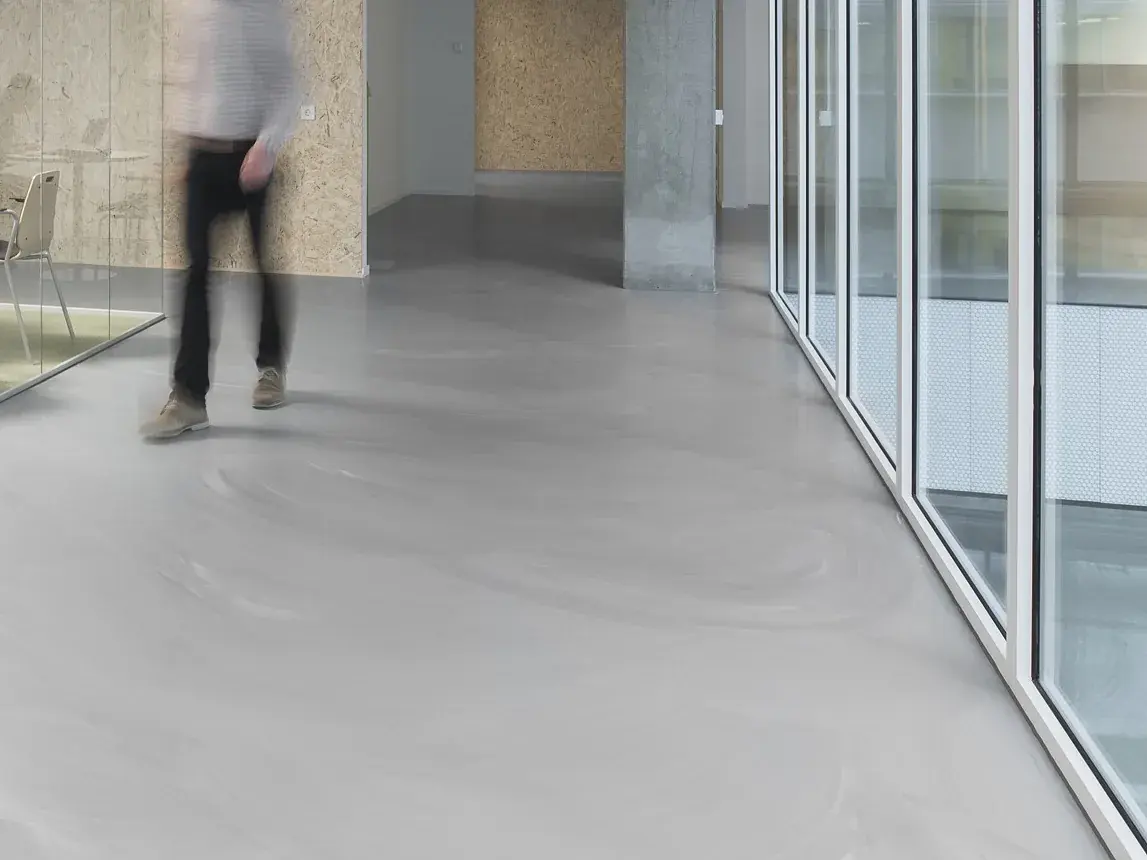
Office corridor, light grey, broad soft strokes 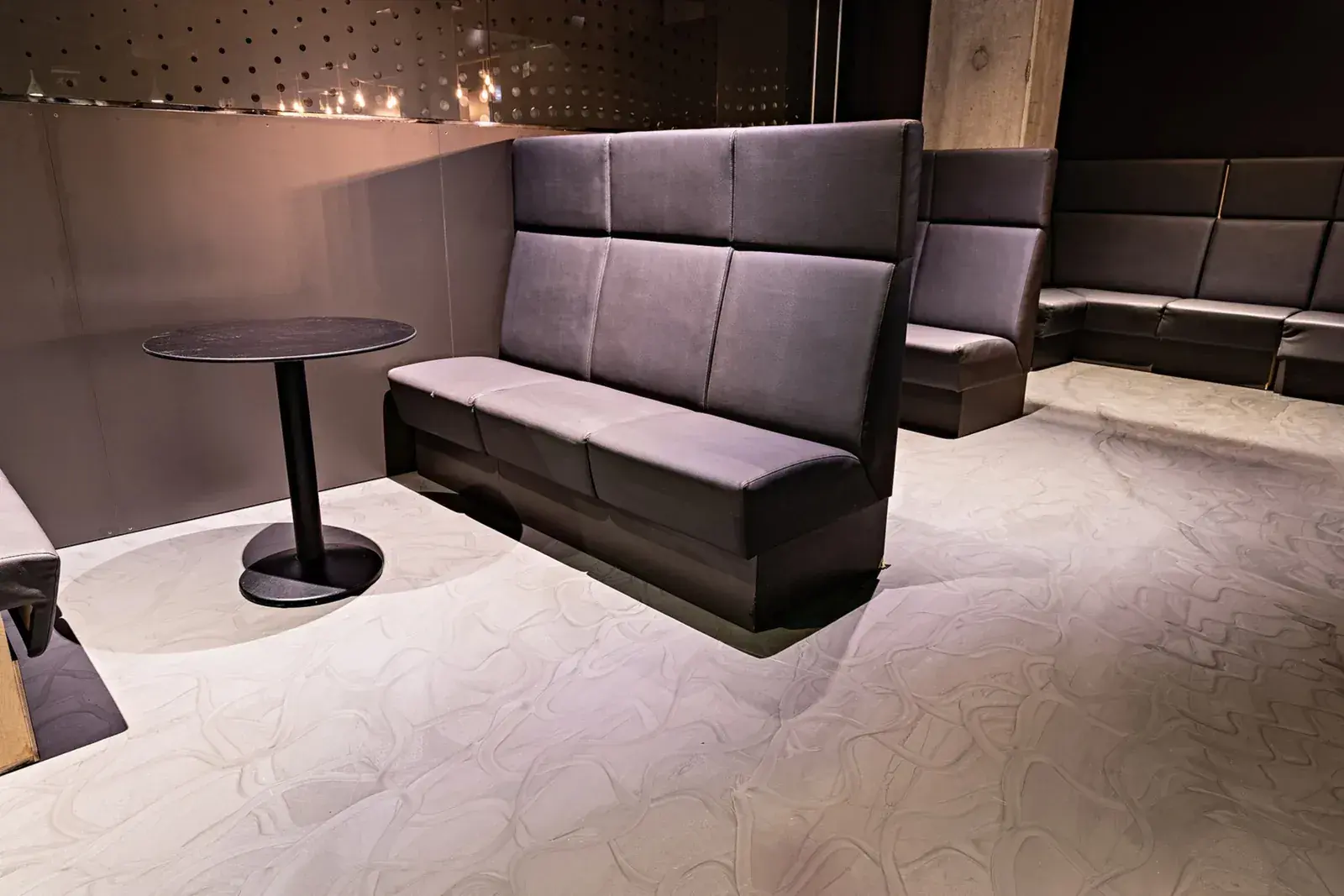
Lounge, light grey, more pronounced pattern 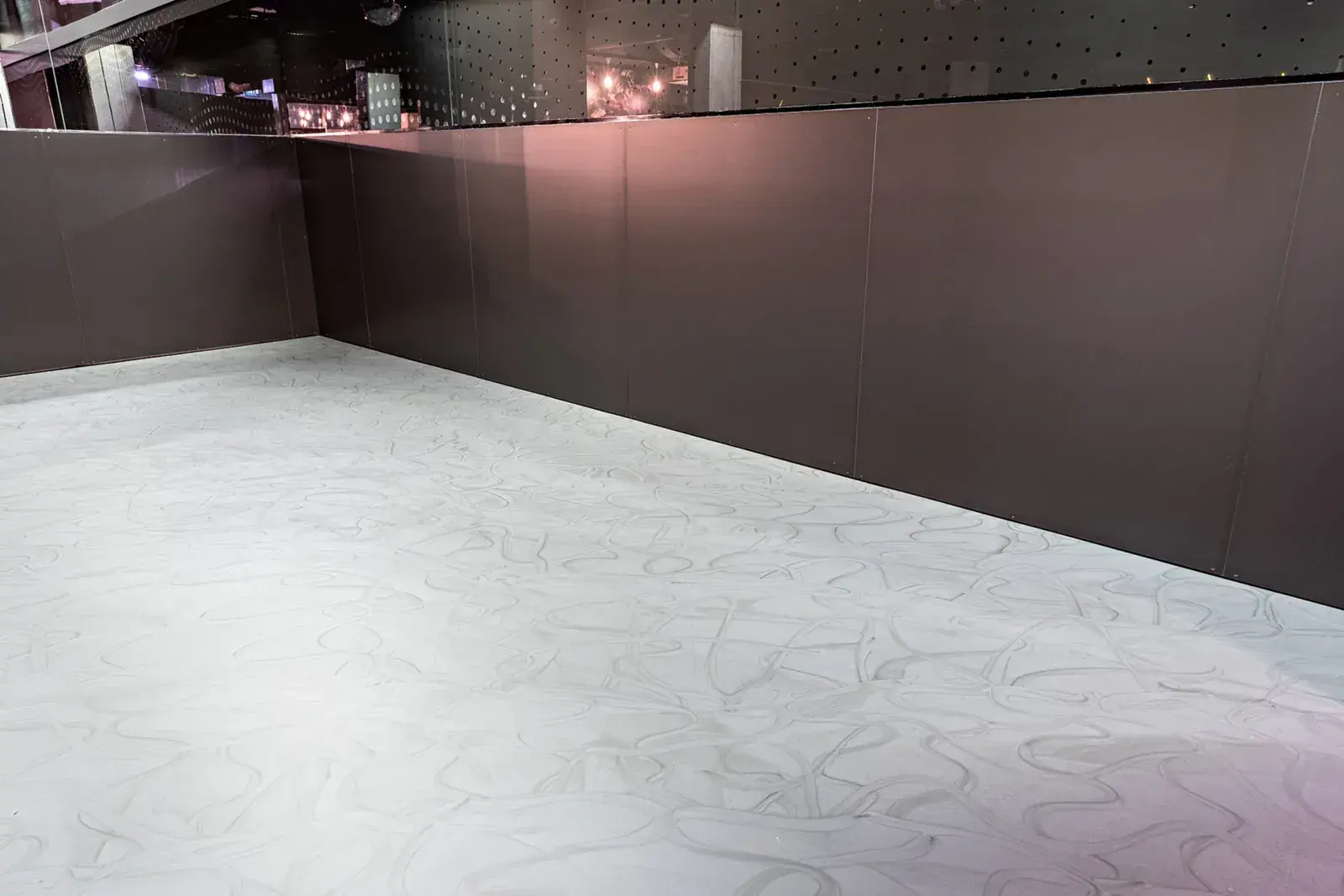
Bar, light grey, the boldest stroke of these four
Surface close-up
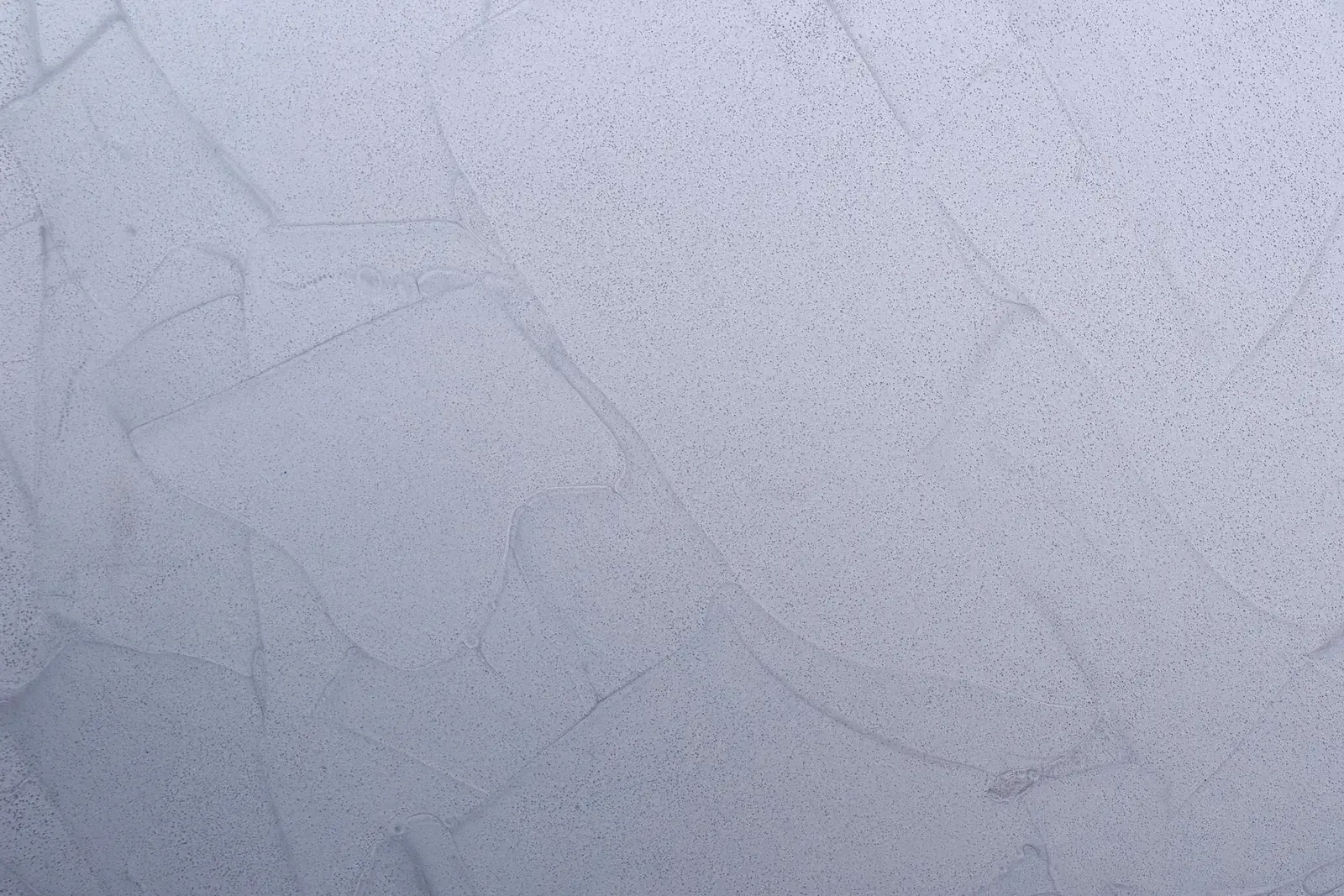
Surface close-up in a light shade 
Surface close-up in the Sky Line shade
Build-up cross-section
How we install Velura
Step by step, including the waiting times between coats. This is the sequence that is actually followed on site.
1. Site survey and substrate testing
We measure the residual moisture and check the strength and flatness of the substrate. The manufacturer requires moisture below 4% and a substrate free of rising damp. If the substrate is damp, we don’t pour until the moisture has been dealt with.
2. Grinding and vacuuming
We grind the substrate mechanically, remove the cement laitance and vacuum thoroughly. Resin won’t bond to dust.
3. Levelling layer
Onto the primer we pour Sikafloor Level-30 levelling compound at least 4 mm thick. A thinner layer loses strength and cracks. Velura itself is only around 2 mm, so any unevenness in the substrate would show through it.
4. Sanding and intermediate coat
We sand the cured levelling layer, vacuum it and seal it with an intermediate coat of Sikafloor-150 Plus, about 0.4 kg/m².
5. Pouring the Velura
Sikafloor-3000 FX, about 2.8 kg/m², which is roughly 2 mm. We pour in a single shade from a single production batch and work the pattern in with a trowel. The room has to be at +15 to +30 °C, and we protect the fresh layer from moisture for at least 24 hours.
6. Matt topcoat
We seal the surface with Sikafloor-304 W matt topcoat, about 0.13 kg/m² per coat.
7. Curing
At +20 °C the floor can be walked on after about 16 hours, takes light traffic after 24 hours and is fully cured in about 4 days. Until then, don’t put heavy furniture on it.
Where Velura works and where it doesn’t
Where it works
- Flats and houses
Living spaces where you want a continuous, joint-free surface that is softer underfoot than tiles or epoxy.
- Offices, shops and entrance halls
Dry interiors where the floor should look calm and be easy to maintain. The manufacturer lists these spaces too.
- Rooms with underfloor heating
It works, with one limitation: heavy furniture needs pads underneath, otherwise it can leave an imprint on the heated surface.
Where it doesn’t
- Not outdoors
No terraces, balconies or outdoor garages. Velura is for indoor use only.
- Not on a damp substrate
The substrate must have a moisture content below 4% and no rising damp. Until the moisture has been dealt with, we don’t pour.
- Not in a garage or workshop
The manufacturer specifies the material for residential, commercial and public interiors; garages are not among them. For a garage we recommend a solid-colour or flake epoxy floor.
- If you want the exact pattern from a photo
Trowel strokes can’t be repeated. A sample shows the shade and the character of the pattern, not the pattern of your floor.
Maintenance
Routine cleaning
The surface has no joints, so dirt has nowhere to hide. A mop and a suitable cleaning product are all you need.
Surface care
The manufacturer recommends a floor-care product and regular cleaning so that the surface keeps its looks for a long time.
What damages the surface
Sand, grit from the street and abrasive cleaners scratch the matt surface. A doormat at the entrance is the cheapest protection.
Point loads
The surface is flexible. Put pads under the feet of heavy furniture, especially on a heated floor.
Frequently asked questions
Velura: the questions we’re asked most often.
What is the difference between Velura, a marble-effect floor and Mistral?
Is Velura suitable for underfloor heating?
Can I choose an exact shade?
How do you look after Velura?
How long does installation take, and when can I walk on the floor?
Can Velura be used outdoors, on a terrace or balcony?
Why is Velura softer and quieter than epoxy?
What are Velura’s emissions and reaction to fire?
Want to know what it will cost?
The price depends mainly on the condition of the substrate. Put together a no-obligation quote online in a few clicks.