Epoxy flake color chart
Base color, flakes, coverage
A flake floor comes down to three decisions in a row. First the color of the base coat, which goes down first, then the color of the flakes, and finally how many of them are broadcast into the wet coat.
Base color
We mix to RAL, so the base can be any shade. Three of them are shown below.
- Clay brown8003
- Light gray7035
- Jet black9005
Flake color
It can be a single color; it doesn’t have to be a mix. We can also make up a custom blend for you.
- Black & white
- Beige & brown
- Gray & blue
Flake coverage
The same blend can look calm or completely covered, depending on how many flakes go down.
- Sparse
- Medium
- Full
You can see the difference in the examples below.
How many flakes go down
All three examples have the same light gray base and the same black, blue and white flakes. Only the coverage changes.
This flake blend isn’t one of the three mixes above, because the examples are only there to show coverage. Of our mixes, Gray & blue comes closest to it.
 Sparse
The flakes are just an accent; the base color leads. For homes, where the floor should stay calm.
 Medium
The most common choice. The base shows through, while the flakes break up the surface and hide everyday dirt.
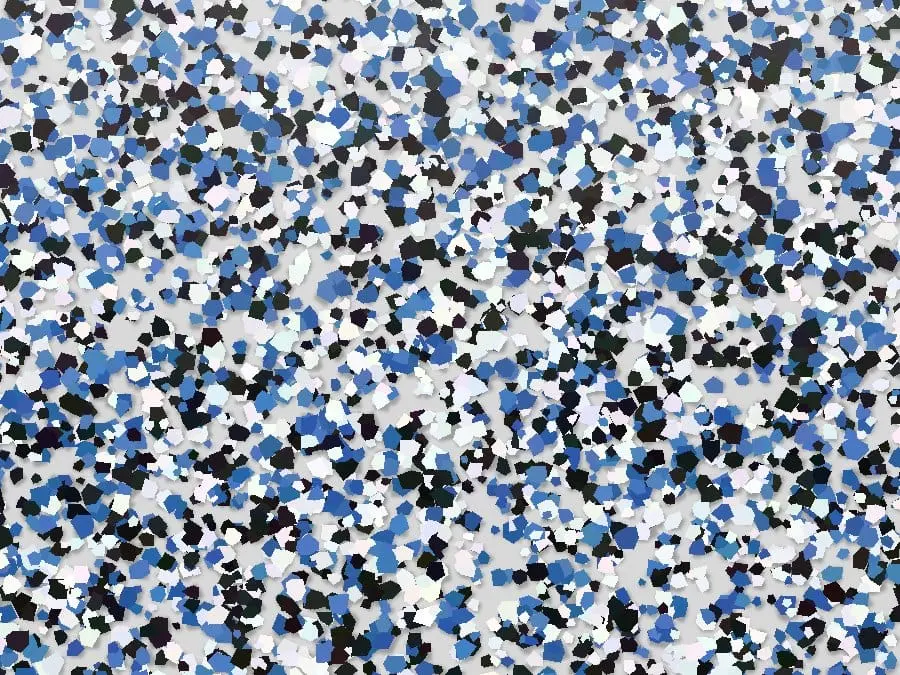 Full+$0.52 /sq ft
The flakes cover the whole surface and the base disappears. The surface is sanded back and sealed with a topcoat.
How it looks together
The same three flake mixes on three different base colors, all at medium coverage. The same flakes look different every time on a brown, gray or black base.
Base: Clay brownRAL 8003
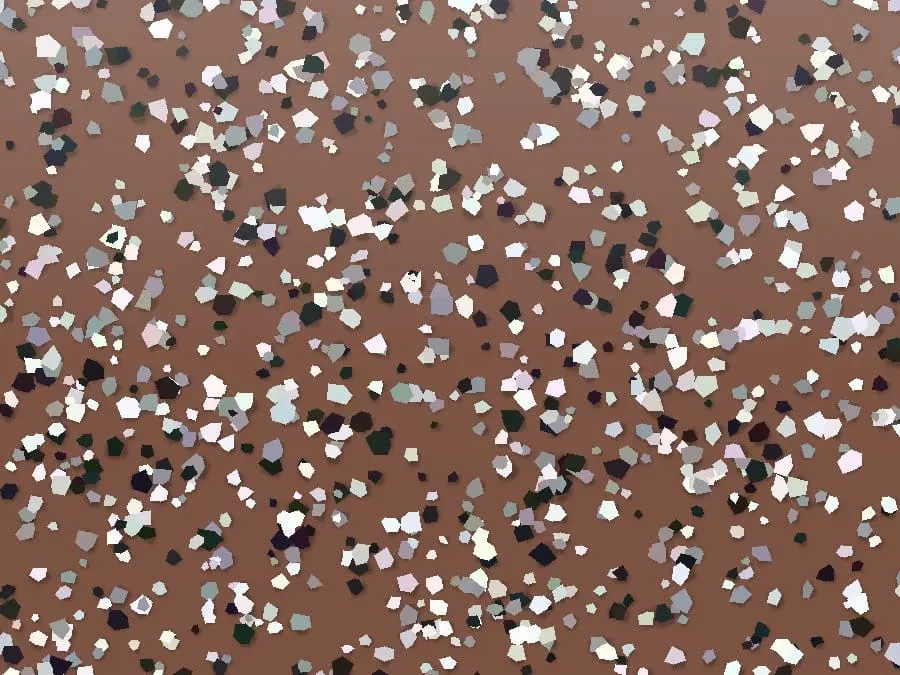 Black & white flakesbase RAL 8003
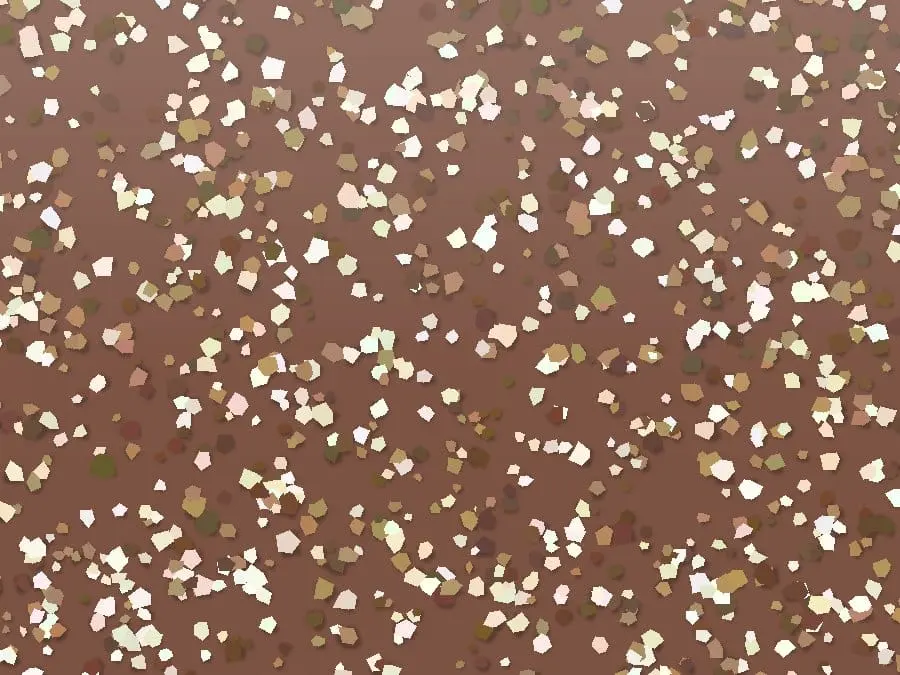 Beige & brown flakesbase RAL 8003
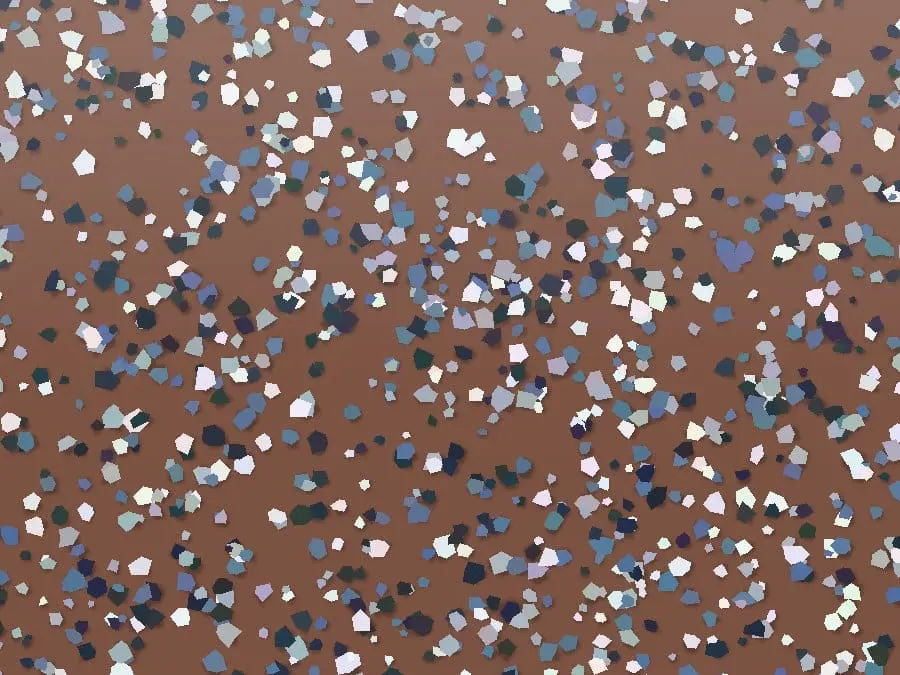 Gray & blue flakesbase RAL 8003
Base: Light grayRAL 7035
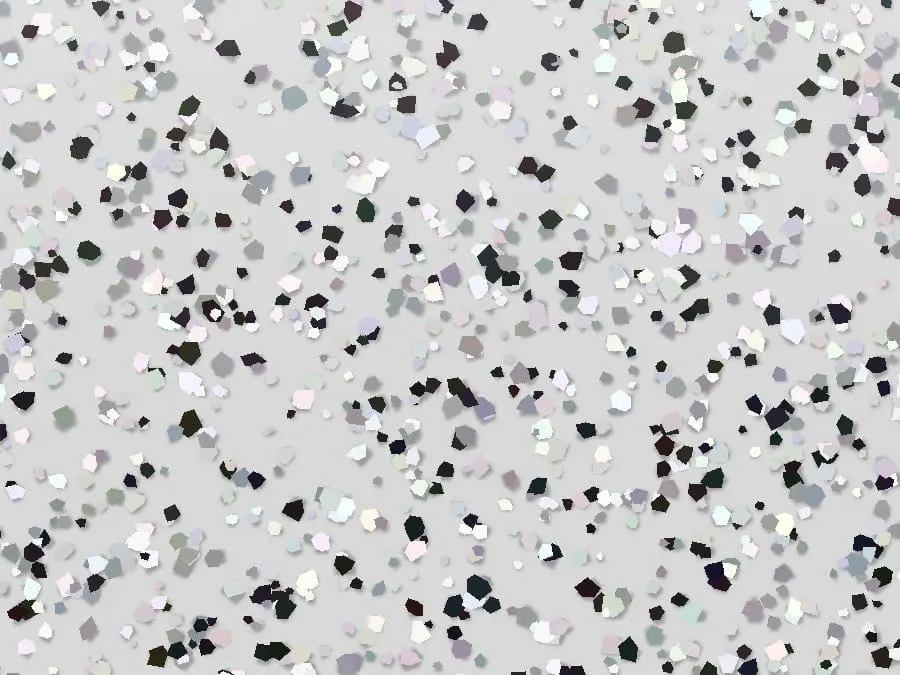 Black & white flakesbase RAL 7035
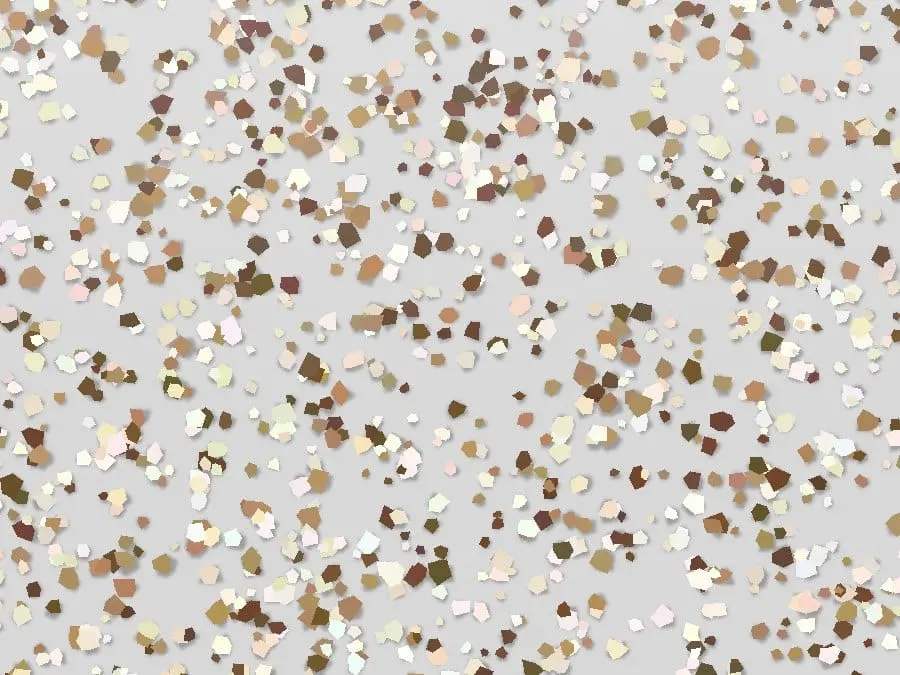 Beige & brown flakesbase RAL 7035
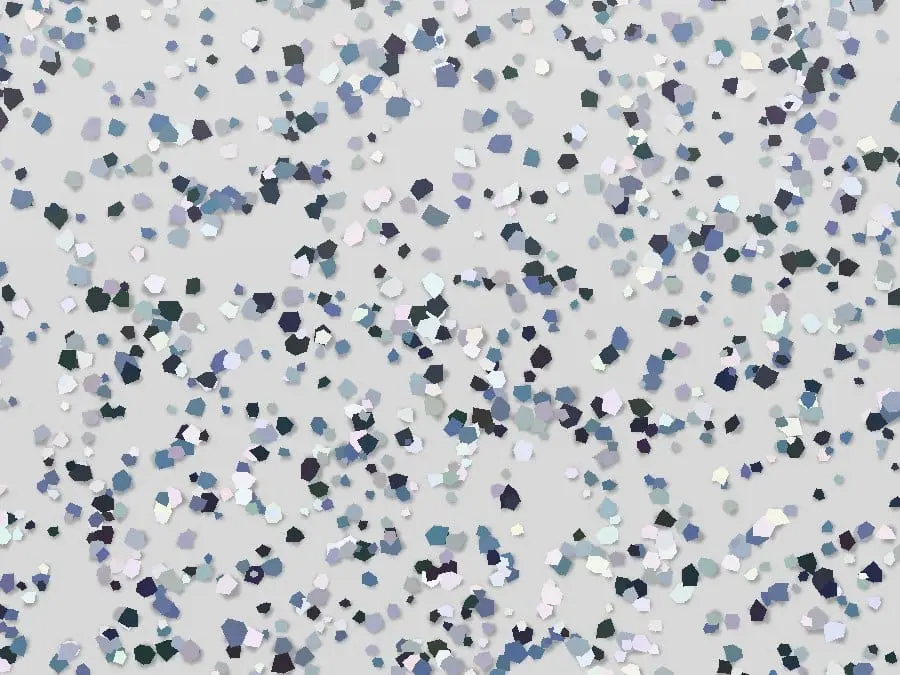 Gray & blue flakesbase RAL 7035
Base: Jet blackRAL 9005
 Black & white flakesbase RAL 9005
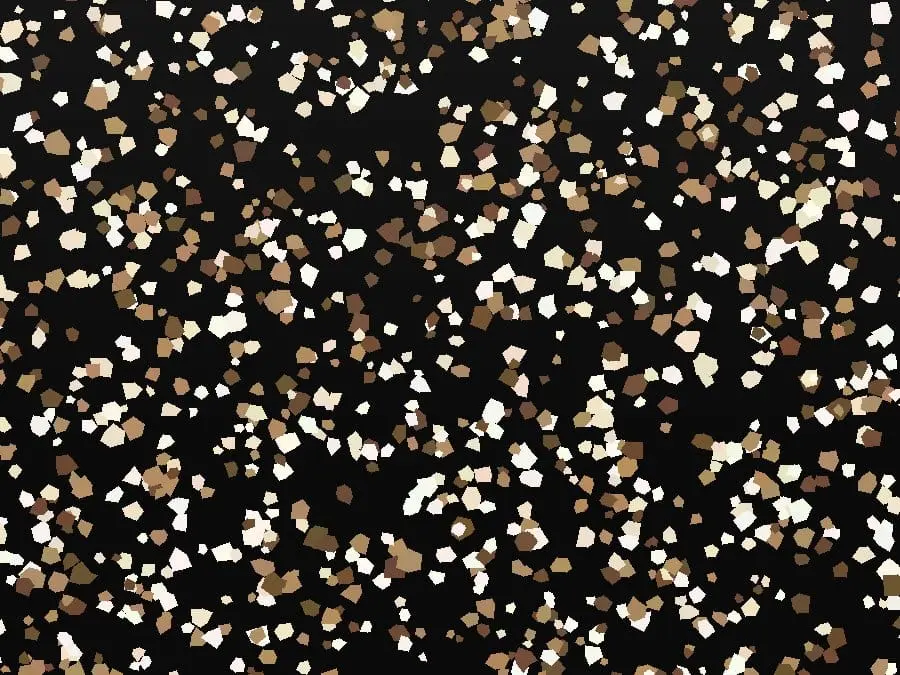 Beige & brown flakesbase RAL 9005
 Gray & blue flakesbase RAL 9005
The examples are rendered visualizations of the combinations, not photos of finished floors.